
Coastal field note / 9 minute read
Blue water,
sharp conditions.
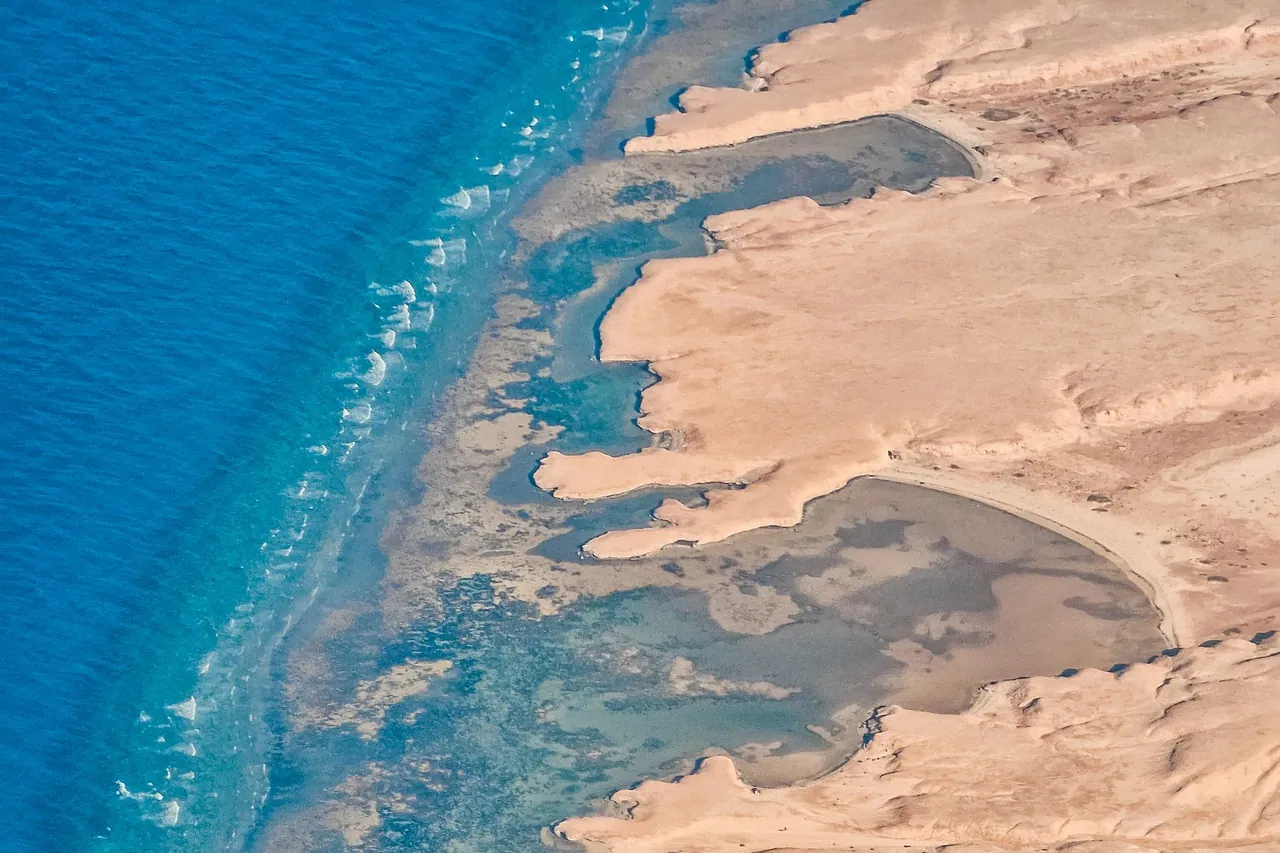
The Red Sea coast can appear visually calm while sun, dry wind and reflected light build exposure quickly. A useful shore plan begins with conditions rather than a list of views.
Read access before the water
Not every visible shoreline is public or suitable for entry. Use clearly permitted access, follow signs and ask on-site staff when boundaries are unclear. This guide does not assess individual swimming areas or current conditions.
Expect stronger reflection
Water and pale ground reflect sunlight upward. Apply sun protection to easily missed areas, keep water close and use real shade rather than relying on a short pause beside a wall.
Protect the shoreline
Avoid standing on living or fragile coastal formations, collecting natural material or leaving food packaging behind. Keep a stable distance from wildlife and do not move animals or objects to compose a photograph.
Make wind visible
Wind can flatten heat perception while increasing dehydration. It also carries fine dust and salt. A simple lens cloth, sealed bag and secure strap help protect equipment without turning the outing into a gear exercise.
Use a shore-entry check
Before moving closer, identify the permitted approach, the stable return path, available shade and any posted restrictions. If one element is unclear, remain at the observation point. Clear-looking water is not evidence about depth, current or suitable entry.
Leave natural material in place
Shells, coral fragments, stones and living organisms belong to the shoreline system. Observe them where they are, avoid rearranging objects for photographs and carry all packaging away. Low-impact attention is more useful than collecting a souvenir.
Condition table
Four signals that change the plan
| Signal | What it does not tell you | Conservative response |
|---|---|---|
| Clear water | Depth, current or permitted access | Use only clearly identified access and current on-site guidance |
| Dry wind | How quickly heat exposure is accumulating | Keep drinking and take planned shade breaks |
| Pale shoreline | Whether the surface is stable or ecologically sensitive | Stay on established approaches |
| Calm appearance | Later weather or changing water conditions | Check current information and maintain an easy return |
Shoreline impact checklist
- □ Leave coral fragments and shells where they are
- □ Do not stand on living formations
- □ Keep food and packaging secured
- □ Use established paths and access points
- □ Maintain distance from wildlife
- □ Do not rearrange natural material for photographs
Sources and verification
- UN Environment Programme: Red Sea and Gulf of Aden regional convention — background on coral reefs, seagrass, mangroves and regional environmental pressure.
- World Health Organization: ultraviolet radiation — reflected UV and protective measures.
Sources reviewed 4 September 2026.
Continue reading