
Open country / 11 minute read
Distance needs
respect.
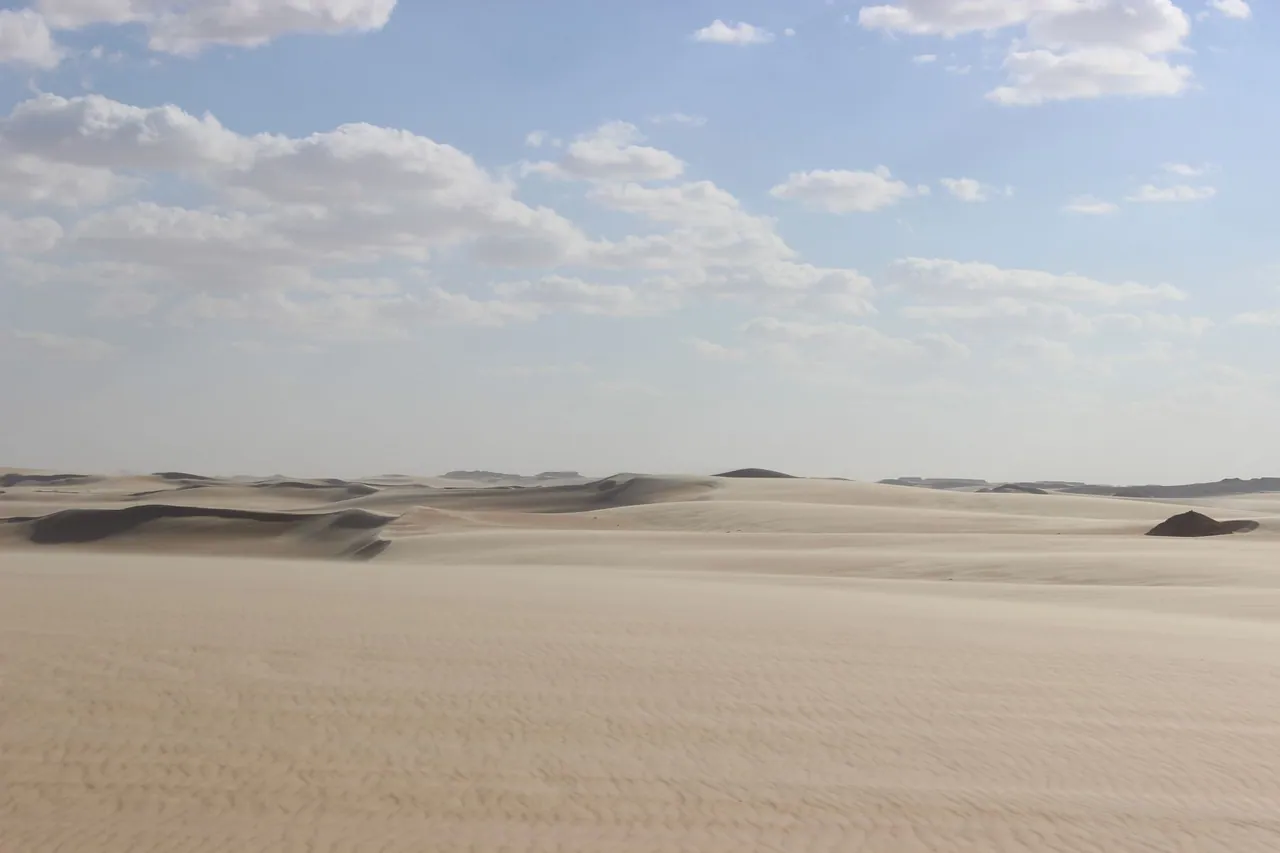
Desert scenery compresses scale. A ridge that appears close can be far away, a smooth surface can hide difficult ground, and temperature can fall quickly after sunset. Preparation is the subject, not an afterthought.
Do not improvise remote access
Remote desert travel requires current local knowledge, an appropriate route, reliable communication and people who understand the conditions. Do not use a general article as navigation or permission to enter open country.
Measure the whole exposure
Think about travel time in both directions, available water, shade, wind and the point when daylight changes. Heat stress can build before it becomes obvious. Turnaround decisions should be made early.
Keep landmarks in context
Repeated rock forms and broad plains make visual navigation unreliable. Offline maps may also omit closures, soft ground or access boundaries. Stay with a clear plan and never separate casually from your transport or group.
Leave a light footprint
Use established surfaces where available, carry every item out and leave stones, fossils and plants in place. Avoid marking rock, building cairns or driving new lines across undisturbed ground.
Treat dust as a change of plan
Raised dust can reduce visibility quickly and make familiar-looking ground difficult to read. Do not continue simply because the intended stop appears close. Protect eyes and equipment, follow current local instructions and move only according to the established plan.
Write down a turnaround rule
Before departure, define the time or condition that ends the outing: changing visibility, stronger wind, a communication problem or a fixed daylight margin. A rule made in advance is easier to follow than an improvised decision made while tired.
Decision diagram
Continue, pause or turn back?
Route, visibility, communication, water and daylight margin all remain within the original plan.
Wind rises, landmarks become less distinct or someone needs time to reassess their condition.
Visibility, communication or the return margin no longer meets the rule agreed before departure.
This diagram is a conservative planning aid. It is not remote-area navigation or emergency instruction.
Desert condition record
| Check | At departure | At turnaround point |
|---|---|---|
| Visibility | Landmarks and horizon clearly defined | Any reduction triggers reassessment |
| Communication | Tested and understood | Loss means follow the pre-agreed response |
| Time margin | Return allowance written down | Do not spend the margin on one more stop |
| People | Everyone understands the plan | The least comfortable person sets the pace |
Sources and verification
- World Meteorological Organization: dust and sand storm hazards — evidence that raised dust can drastically reduce visibility.
- World Health Organization: heatwaves and keeping cool — hydration, shade and timing guidance.
Sources reviewed 4 September 2026.
Continue reading